
The Difference Between a Diary and a Journal: A Simple Guide

Two notebooks sit on two bedside tables and look identical from the outside. Inside, they are doing different jobs. One records that it rained on the walk to the station, that the meeting ran long, that a friend rang at nine. The other asks why the walk felt heavy, what the meeting stirred up, and why that phone call stayed with you.
That difference — events on one side, thinking on the other — is the simplest way to describe a diary and a journal. It is not a strict rule, and most people end up somewhere in the middle. But knowing which one you are reaching for makes the blank page far less intimidating.
What a Diary Actually Is
A diary is a record. Its natural tense is the past and its unit of measurement is the day. You write what happened, roughly in the order it happened, and you date the page.
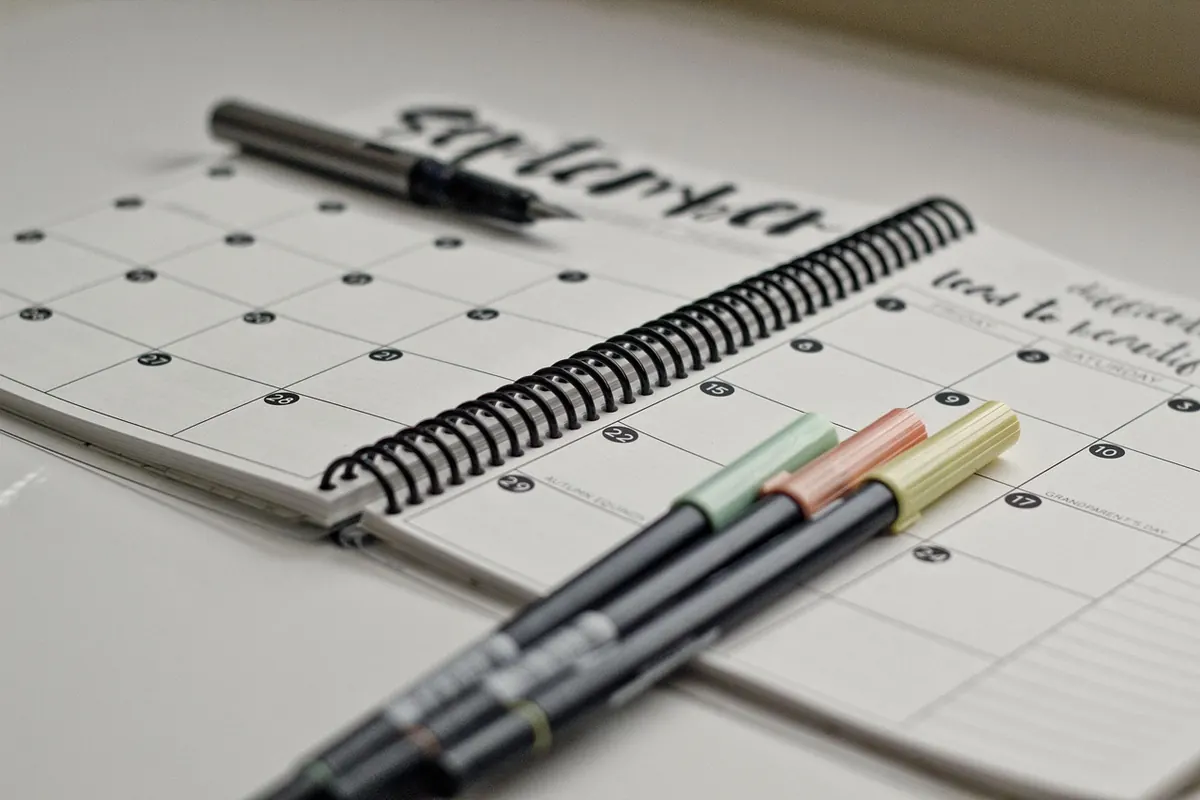
British readers should note one small confusion: in the UK, "diary" also means the thing you keep appointments in. That is a planner, not a personal record, though the two share a spine and a habit of travelling everywhere with you.
A diary entry can be three lines long:
Tuesday. Rain all morning. Missed the 8:12, walked instead. Took the long way past the allotments. Beans are up.
Nothing there is analysed. Nothing is explained. Yet six months later that page will bring back an entire morning — the wet coat, the smell of the path, the mood you were in. The value of a diary lies in accumulation. Facts age well; moods are harder to trust later, which is why recording the plain details is worth doing even when they seem dull.
What a Journal Does Differently
A journal is a conversation with yourself that happens on paper. The subject is not the day but your response to it. Its questions are why, how and what next.
Typical journal lines look like this:
- What made me tense today — was it the thing itself, or was I just tired?
- I keep saying yes to this and I am not sure why.
- If I could replay one hour of today, which hour would I choose?
Journals care less about sequence and more about pattern. A diary tells you that you argued on Thursday. A journal helps you notice that the arguments cluster at the end of the month, or that they follow the nights you sleep badly. That kind of noticing is usually where change starts.
The Practical Differences at a Glance
- Purpose: a diary preserves; a journal processes.
- Content: a diary is event-led; a journal is thought-led.
- Structure: a diary is dated and chronological; a journal can wander.
- Length: a diary can be one sentence; a journal usually wants a paragraph.
- Rereading: diaries are for remembering; journals are for spotting patterns.
- Time: a diary takes two minutes; a journal takes ten to twenty.
Be honest about that last point. If you have five minutes before the lights go out, a diary is the realistic choice. Promising yourself a thoughtful journal entry every night and failing is a quick route to abandoning the notebook altogether.
Where the Two Overlap
The clean split breaks down quickly in real life, and that is fine. A diary entry about a difficult phone call will start explaining itself halfway down the page. A journal entry about a recurring worry usually opens with whatever set it off. The event is the doorway; the reflection is the room.
Some people keep them firmly apart — one book for facts, one for thinking — and that works too. There is no governing body here. The only test worth applying is whether the habit survives past February.
How to Blend Both in One Notebook
You do not need two books. Three approaches work well.
The three-line opening
Start every entry with three factual lines: what you did, where you went, who you saw. Then write whatever those facts bring up. The detail anchors the entry in a real day, and the rest is free to meander. This is probably the easiest method to keep going.
The two-column page
Draw a line down the middle. On the left, what happened. On the right, what you make of it. It is useful when you are working through a decision and want to see your own reasoning laid out where you can inspect it.
The weekly split
Keep quick daily notes for six days, then give yourself one longer session at the weekend. The notes feed the weekend entry, so you are not relying on memory. Twenty minutes on a Sunday is plenty.
Whichever you choose, decide it in advance. Unclear format rules are the main reason people stall — if the page is blank and the expectations are vague, the book tends to get closed.
Common Worries, Settled
"My handwriting is messy." Nobody is marking it. Speed matters more than neatness, and a scrawl you actually wrote beats a tidy page you never filled.
"I have nothing to write about." Then write the weather, the meal and one thing somebody said. On dull days that is the whole entry, and it is still a record of a life.
"Someone might read it." Decide now where it lives — a drawer, a box, a note on the first page about what should happen to it. Then write honestly anyway, because careful writing is guarded writing, and guarded writing is dull. If you are journaling through something painful or a health concern, treat it as support rather than treatment, and speak to your GP or another qualified professional.
Start With Tonight
Begin with the facts, then allow one question. Write the date, the weather and two things that happened. Underneath, ask yourself what you made of it.
If an answer arrives, follow it for as long as it lasts. If nothing comes, you have still kept a diary, and that counts for more than you would expect. Do it badly for a month before you try to do it well, and leave the first few pages empty so you can decide later whether they need an index, a title or nothing at all.
Give it a year and you will have both a record of what occurred and a running conversation with yourself about what it meant. The distinction between a diary and a journal will stop being a puzzle you have to think about. You will simply see it in your own handwriting.
Photo: piviso / Pixabay